


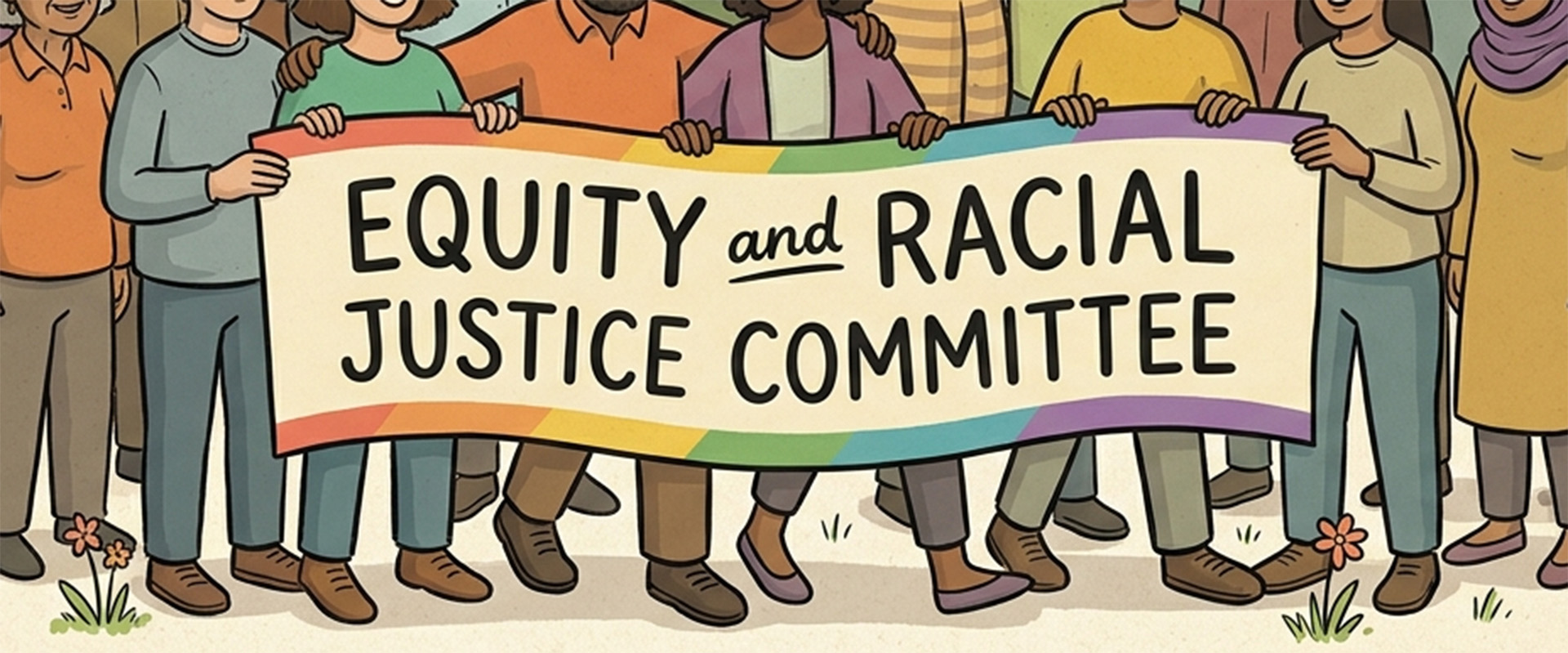
Anti-Racism Committee Changes Its Name
In April 2018, a packed Congregational Hall welcomed author Debby Irving to discuss her book Waking Up White, in which she reflects on her own upbringing to examine how white privilege and systemic racism shaped her understanding of race, inviting readers to recognize and challenge those patterns in themselves and society.
Following that event, BMPC created a new Anti-Racism Task Force, and several book groups were formed to further examine how history, race, and white privilege shape everyday life for people of color. For several years, dedicated members of these groups engaged in study and discussion. Over time, it became clear that the church as a whole needed to make a commitment to more fully understand and respond to systemic racism and implicit bias. That commitment would continue to grow in both depth and breadth over the years, eventually leading to the committee’s new name.
Over the next eight years, the task force sponsored educational opportunities for the congregation, took part in Black Lives Matter rallies, worshiped in neighboring African American churches, and participated in community initiatives. The importance of this work led to the task force becoming the Anti-Racism Committee, establishing its ongoing presence in the life of the church.
As time passed, conversations began to include the marginalization and discrimination experienced by groups beyond the Black community. As public discussion around Diversity, Equity, and Inclusion became more prominent, it became clear that, in response to Christ’s call to love our neighbors and seek justice, we needed to broaden the scope of our mission to include the LGBTQIA+ community, refugees, immigrants, people with disabilities, and all who experience discrimination. BMPC’s Commitment to Belonging and Inclusion document was approved by the Session in July 2024. In March 2026, the Anti-Racism Committee became the Equity and Racial Justice Committee, further solidifying this broader commitment.
Equity recognizes that people have different circumstances and seeks to ensure fair access to opportunities and outcomes by addressing barriers and providing support according to need.
Racial Justice confronts racism by identifying and changing unjust systems, practices, and attitudes that create unequal outcomes.
Belonging and Inclusion are fostered when equity and racial justice are pursued, obstacles to full participation are removed, and inequitable social structures are reformed.